
Parts of this story came to me in a dream. Not once, but twice. The transmissions go on the page.
La ley del silencio
The Law of Silence
by Ramsés Dávila-Luna at The Writer’s Cavern
Diary of a Nosy Churchgoer that Heard the So-And-So
1940’s
México, Distrito Federal
La refugiada española que se enamoró del chilango. The Spanish refugee who fell in love with the city.
From the stones to the bricks that hissed amongst the shuffling feet at Fuente de Neptuno. Two forbidden loves met near the splashing water at night. A Duesenberg Model J halted at the roundabout, and a pale-skinned young madam, Sofía De La Torre, stepped out from the driver’s seat in a silk dress and fine fur stoles. At the center of her heart, on the fountain's outer rim, Jesús “Chucho” Rodríguez waited for her with open arms; his jeans were neatly pressed, and the openings sat perfectly over his brown leather Derby shoes.
Lips touched. Arms crossed. Two waists intertwined. One Catalana from Roma, the other a bronze-complexioned Tugurio from Colonia Morelos.
At Sofía’s camp, a bloodthirsty hunger for power grew. Every seed sprouted like the rest, under family masters. To Chucho, poverty had him watering day to day as it came; from above, the refugee was sent to him as a new crop.
“Estoy embarazada, Chucho. Tenemos que salir de la ciudad y desaparecer,” Sofía told Jesús.
[I’m pregnant, Chucho. We must leave the city and disappear.]
“Iré a donde tus ojos me lleven,” Jesús replied, pressing closer to her face to see her inner seraphim.
[I will go wherever your eyes lead me.]
Intense lights beamed in, and royalty, with its cruisers, filled the space. Unmarked police cars blocked traffic. The movers and shakers who controlled Sofía pulled her toward them.
Through the sea of bodies, her father, David De La Torre, emerged; he polished his Patek Philippe pocket watch with a scarf, then put it away. David was tall and slim; his figure stood out even more in the dashing suits he always wore, no matter the occasion. The grays in his slicked hair gave him an extravagance that made him look even more brooding. Behind them, in the darkness, the nana looked at Chucho with disdain.
“No se puede dar vida a algo que se la quitará. Tu sangre fue prometida a otra persona. ¿De qué otra manera puede ser nuestra la ciudad, Sofía?” David said in a calm tone.
[You cannot give life to something that will take it away. Your blood was promised to someone else. How else can the city be ours, Sofía?]
“¿Qué ganas siendo un monstruo así?” Jesús replied in defiance.
[What do you gain by being a monster like that?]
“Mis tierras frías dieron origen a lo que te ha llenado de vida. Esa creación fue mi victoria y tú me la has quitado. Las temperaturas deben permanecer iguales,” David told Jesús as he spat on the ground in disgust.
[My cold lands gave rise to that which has filled you with life. That creation was my victory, and you have taken it from me. The temperatures must remain the same.]
"¡Ya no soy un De La Torre! ¡Dejaré tus campos podridos y me convertiré en un Rodríguez!," Sofía screamed as she tried to pull away from the men who grabbed her.
[I am no longer a De La Torre! I will leave your rotting fields behind and become a Rodríguez!]
David backhanded Sofía, and she let out tears as blood oozed from her lower lip. Jesús motioned to swing his arm to strike David on the face, but the goons began to beat him mercilessly with fierce punches and kicks that made him fall to the ground.
“¡Déjalo en paz! ¡Es el padre de mi hijo! ¡Te odio! ¡Te odio!” Sofía screamed as she kicked her legs, trying to break free from the men’s grips as they pulled her into a car.
[Leave him alone! He’s the father of my child! I hate you! I hate you!]
Seeing Sofía leave made Jesús' anger flare, and he lunged up, striking one of the men and clearing a path to the car’s window where Sofía was.
“¡Te amo, Jesús! ¡Te amo!” Sofía cried out.
[I love you, Jesus! I love You!]
“Te amaré por siempre,” Jesús mumbled. The bruises and welts on Jesús’ face showed through. Blood painted the inside of his tongue.
[I will love you forever.]
Their eyes met through the glass. Jesús’ green eyes were wide in shock. They both pressed their hands together on the glass for a brief second until the car sped off and Sofía saw more men tackle Jesús to the ground.
Damsel was sent to a convent on the city's outskirts. There, she would play Rapunzel throughout her pregnancy, waiting for her birth so she could re-enter her world in Roma with a new belly. Power would climb her locks and erase the indigenous heritage in her tower.
Under cover of darkness, Jesús and his parents were bound tightly and thrown into the back of a work truck. Conquistadores ferried them off toward Morelos. The bodies were taken to a sugar plantation. With their mouths tied, Jesús and his parents could only mourn and whimper at the evils inflicted upon them. Their bodies were badly beaten and battered; they no longer fought within them. Each of them wiggled until their faces met, and they exchanged heavy goodbye glances the whole way.
Blood Sugar
David De La Torre and his thugs carried the bodies and dumped them into a giant pit, one by one. Jesús went in first, and the bodies of his mother and father soon stacked over him. Their breaths got heavier and heavier as men above them poured dirt over their bodies with shovels.
“¡La amo! ¡La amo con todo mi corazón! ¡Nunca podrán arrebatarme eso! Amé a su hija desde la primera vez que la vi, ¡y ella me correspondió! ¡Sentí su amor! ¡Lo viví! ¡Nunca morirá ese amor!” Jesús said as the tape around his mouth loosened.
[I love her! I love her with all my heart! They can never take that away from me! I loved your daughter from the moment I first saw her, and she loved me back! I felt her love! I lived it! That love will never die!]
“Ahora amarás la tierra y tu sangre ayudará a que crezca la caña de azúcar. Es donde tu sangre siempre perteneció y, al mezclarse con la mía, te espera este destino,” David replied.
[Now you will love the soil, and your blood will help the sugarcane grow. It’s where your blood has always belonged, and now that it has mixed with mine, this is your fate.]
The nana stood on the edge of the pit as the impact of what she’d done made her gulp in regret; her eyes twitched as Jesús’s screams became muffled by the dirt forced into his mouth. Violence made her forget thrones, and she realized the true price of stealing love from another. A revolver crept behind her head, and a shot was let out as she too fell into the pit to be covered by the dirt.
Power is at its strongest in the dark. David shook hands with the landowner whose son was promised Sofía's hand. Dirt now covered all the bodies, and they became one with the soil, but the shovels around them worked overtime to keep it from coming in. A rush of frantic farmers arrived, stabbing jagged lengths of raw sugarcane stalk deep into the ditch.
History erased, lost in a nameless harvest in a forgotten field.
Word of the gruesome deaths reached the pulpit. A Father, deep in thought, stared at the doves in his courtyard. One dove landed on a nearby wooden dove-rest stand, revealing a plastic capsule tied to a ring on its left leg.
The convent of nuns became a quiet nest, and the sisters its watchful hens. Sofía suffered in silent torment as her belly grew more as the months passed. The nuns fed her by force and put drink to her mouth; they would take turns walking with Sofía around the convent so she wouldn’t stay bedridden all day. Only when she felt the child’s kicks in her belly did she begin to act of her own volition. The child’s movements reminded her of her words to keep the Rodríguez name alive.
"Se van a llevar a mi bebé cuando nazca, ¿no? ¿Cómo pueden orar y dejar que me hagan esto?" Sofía said as the nuns prayed over her during their walks.
[They’re going to take my baby away when it’s born, aren’t they? How can they pray and still let this happen to me?]
But the stoic nuns kept praying, conflicted among themselves over the crooked deals they had accepted to bring Sofía to them. One of the nuns, quite frankly, didn’t care, and the donations were all her stomach could take; this nun ran the joint, and only the church's higher-ups could sway her.
Life knocked at the door.
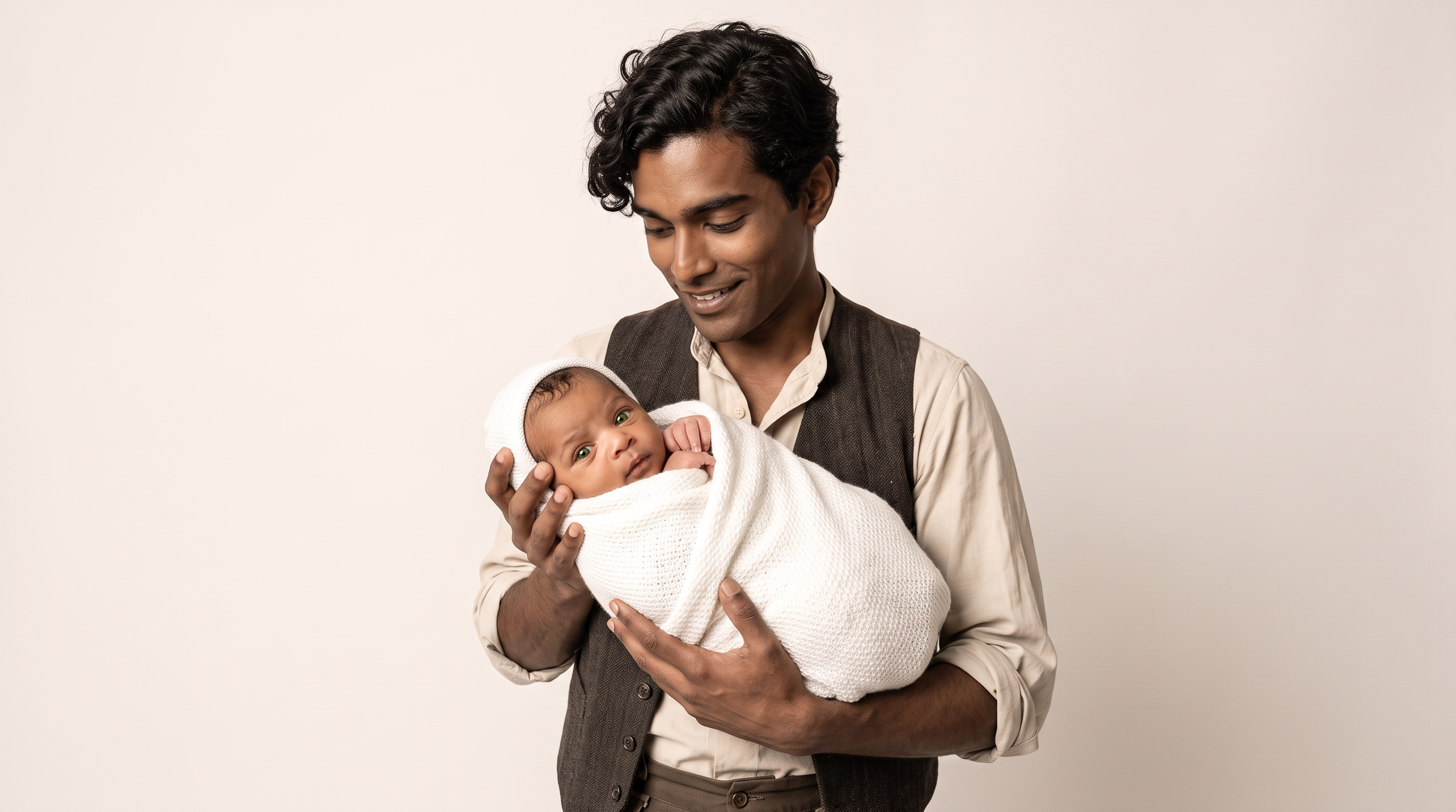
The midwife waited for hours for the child to see light. The nuns prayed and prayed without cease as the midwife cut the child’s umbilical cord and inspected the boy in her arms. A boy with a caramel complexion. Part Catalonia. Part Tugurio.
No one around could call the boy beauty or beast. Savagery had no place here, and tears now accompanied the nuns’ prayers as they each yearned to caress the child. The boy cried in every set of arms until he reached Sofía and then fell silent as their eyes met. The boy’s green eyes looked deeply into Sofía.
The emerald gaze overwhelmed her, and Sofía slipped into a heavy sleep. A dream seeped in, and she was back in her room at her father’s hacienda. The two massive doors to her room swung open, and she walked onto the balcony. Jesús met her and held their baby boy.
“Ni se te ocurra darle mi nombre. Vete, vuela hacia tierras nuevas, ¿me oyes? Te quiero, Sofía. Te quiero muchísimo,” Jesús told her.
[Don’t even think about giving him my name. Go. Fly off to new lands. Do you hear me? I love you, Sofía. I love you so very much.]
Sofía placed her arms around Jesús and the boy as she cried.
“Siento muchísimo todo lo que te causé. Te arruiné. Es mi culpa,” Sofía said.
[I am so incredibly sorry for everything I put you through. I ruined you. It’s my fault.]
“Me demostraste y me diste un amor que algunos jamás llegan a recibir en toda su vida, Sofía. El amor no necesita un ‘lo siento’,” Jesús replied.
[You showed me and gave me a love that some people never get to experience in their entire lives, Sofía. Love doesn’t need an ‘I’m sorry.’]
Jesús's apparition vanished in her arms. Sofía woke to the nuns in her room. One of them held the boy.
“Tenemos que sacarte de aquí, Sofía. Tu padre ha enviado hombres a buscar a tu hijo. Vete, ahora mismo,” a nun said as she placed the boy into Sofía’s arms.
[We must get you out of here, Sofía. Your father has sent men to look for your son. Go. Right now.]
The nuns helped Sofía to her feet. She slowly rose and took small steps. At the main entrance, the cruel nun who ran the convent was hogtied with tape around her mouth; she was blindfolded, and earplugs were firmly pressed into her ears. The nuns led Sofía outside, where a farmer waited in a hay-filled wagon pulled by a horse. Beyond the convent walls, a wooden dove-rest stand sat empty.
“¿Adónde iré?” Sofía asked.
[Where will I go?]
“Ese hombre te llevará más allá de las montañas y las colinas. No llegarás muy lejos por la carretera principal. Te irás hacia el norte, a Estados Unidos. A tierras nuevas,” a nun replied.
[That man will take you beyond the mountains and the hills. You won’t get very far on the main road. You will head north, to the United States. To new lands.]
The nuns moved the hay, stacked high on the farmer’s wagon, to make room for Sofía and her child. They carried Sofía onto the wagon and handed her the boy as they nestled into the crevice. The hay closed in on her as she sat in silence, and the farmer lashed his horse to move the wagon.
The wagon jolted along the pockmarked road. The wheels bumped over every rise and hollow. Sofía’s gaze set on her calf. In dark emerald eyes, Sofía came back to life.
THE END.
Copyright © 2026 The Writer's Cavern by Ramsés Dávila-Luna at The Writer’s Cavern LLC. All rights reserved.